


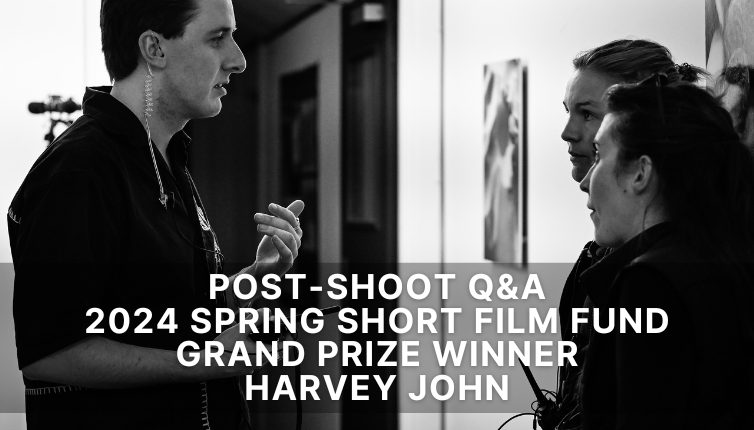
TO CATCH A SIREN, written and produced by Harvey John and directed by Raphaela Wagner, was the Grand Prize Winner of our 2024 Spring Season Short Film Fund. Principal photography was completed in April 2025 and the team is wrapping up post-production as of the publication of this article (September 2025). The story follows a young orphan who desperately searches for the mermaid she believes to be her mother before she is adopted and sent to live far away.
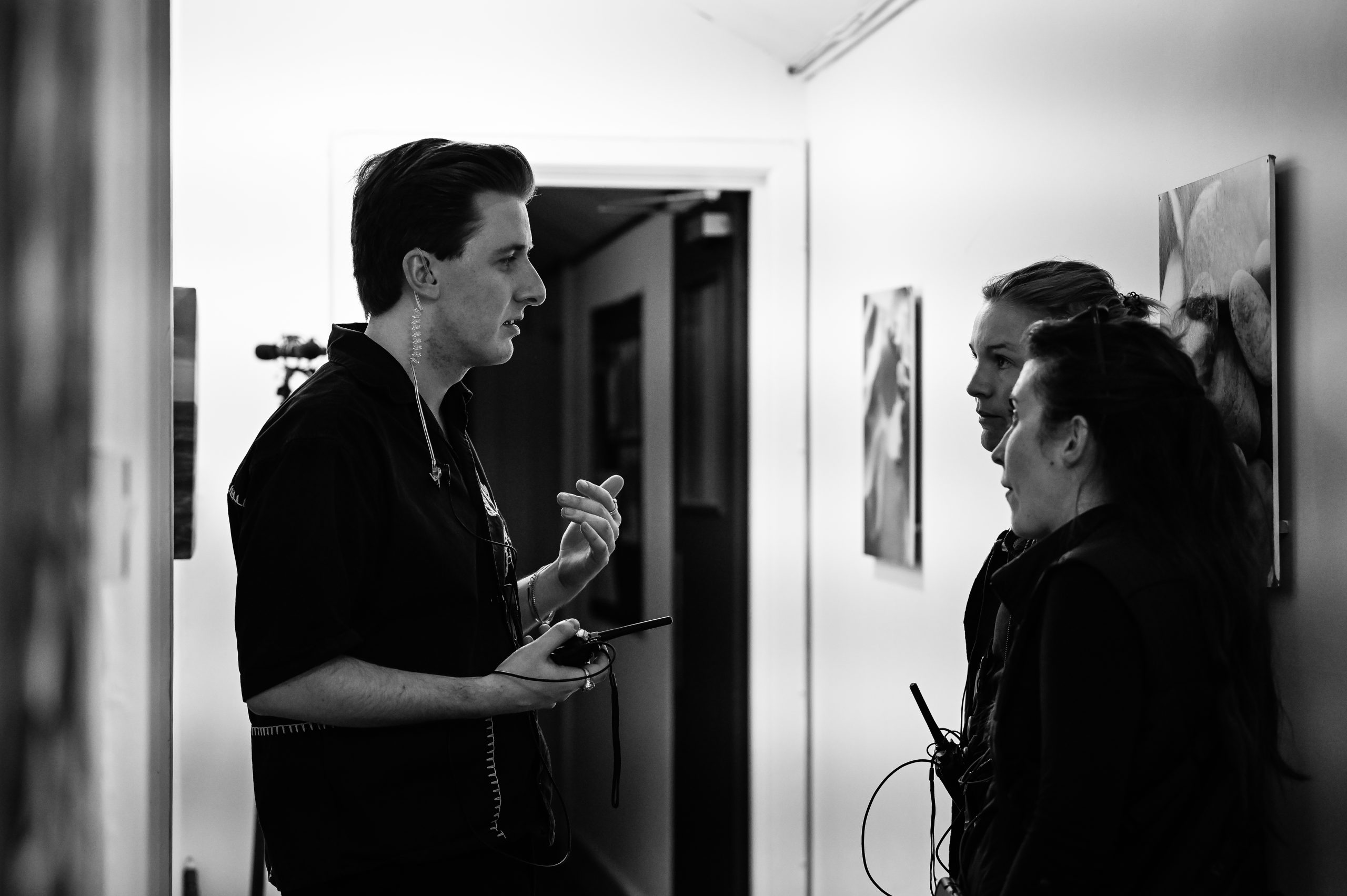
Harvey John on the set of TO CATCH A SIREN
Did you end up developing the script further after winning the Short Film Fund and prior to going into production? If so, what were some of the goals in doing so and do you feel you were able to achieve them?
I did — quite significantly, in fact! The whole team was eager to make the script as powerful and as impactful within as short a page count as possible, and Shore Scripts were amazing in offering clear, actionable feedback that really helped tighten it up. I also had the privilege of connecting with Rozhan Ghamarpoor, a young woman with lived experience of arriving in the UK as a minor via small boat, through the incredible Refugee Support Group. Her insights were invaluable, and I’m so grateful to her for sharing her story with me. That collaboration inspired me to bring on a co-writer — the brilliant Jasmine Mohtashami, who is of Iranian heritage — to help develop the screenplay with greater cultural authenticity. Together, we deepened the characters and story, and one of the biggest shifts we made was changing the main characters from boys to girls. That decision completely transformed the film’s emotional core, adding layers of strength and vulnerability we hadn’t anticipated. I feel really lucky to have worked with such generous and insightful collaborators, and I hope the final piece reflects the care and intention that went into shaping it.
What was your casting process like? How did you find your cast?
Casting this project was a joy — though definitely a challenge! Since our lead needed to be a young actress of Iranian heritage and a strong swimmer, we knew it wouldn’t be easy. Luckily, our amazing children’s casting director, Sydney Aldridge, made the process feel smooth and supported. We put out a nationwide casting call and were blown away by the talent that came through. Most of the process happened via self-tapes and Zoom auditions, but we held a round of in-person auditions in London to meet the finalists for the lead. That’s where we found Layla Badat, who was an absolute dream. Her performance, work ethic, and warmth completely won us over. She was a joy to work with and has such a bright future ahead of her — we all feel incredibly lucky to have found her.
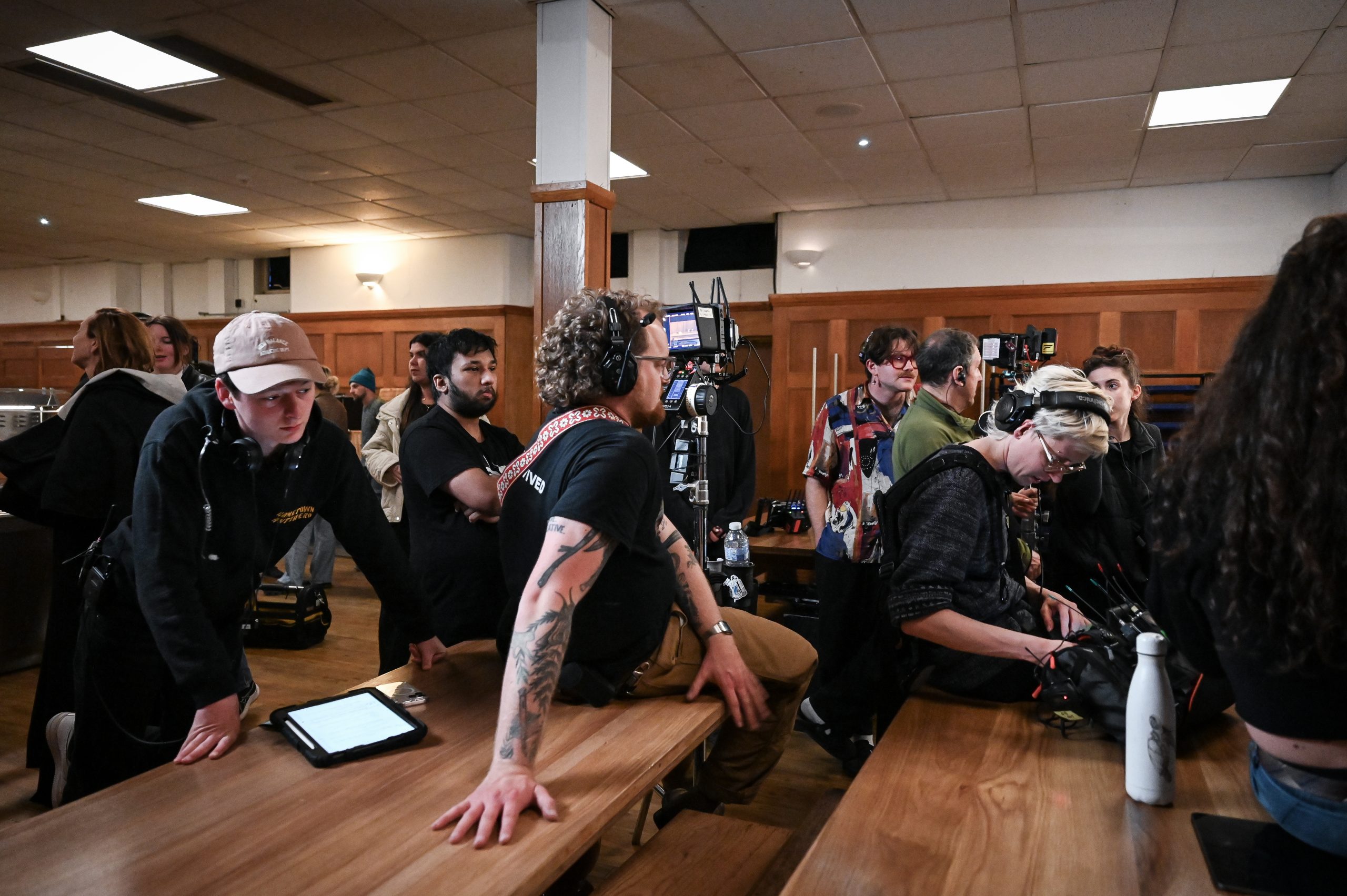
On the set of TO CATCH A SIREN
Who was your DP and how did you bring them on board?
We brought on Rick Joaquim SASC as our Director of Photography, and it was one of the best choices we could have made. Rick is one of the kindest, most passionate collaborators I’ve ever had the pleasure of working with. He and director Raphaela Wagner are a powerhouse team, and their creative synergy shows in every frame of the film. Rick went above and beyond for us — even with tight time and budget constraints — and brought such thoughtfulness to every shot. I’ll always be grateful for his commitment to the project and for how beautifully he helped bring our vision to life.
What was the process like for you working with ARRI Rental?
ARRI Rental was fantastic to work with — and incredibly generous. Because of our child-heavy cast, we opted for a two-camera setup to make the most of their limited time on set, which meant we needed quite a bit of kit. ARRI really came through for us, and I’m honestly not sure we could have pulled off the shoot without their support through the Shore Scripts prize package. They helped us make a stronger film, and we’re incredibly appreciative.
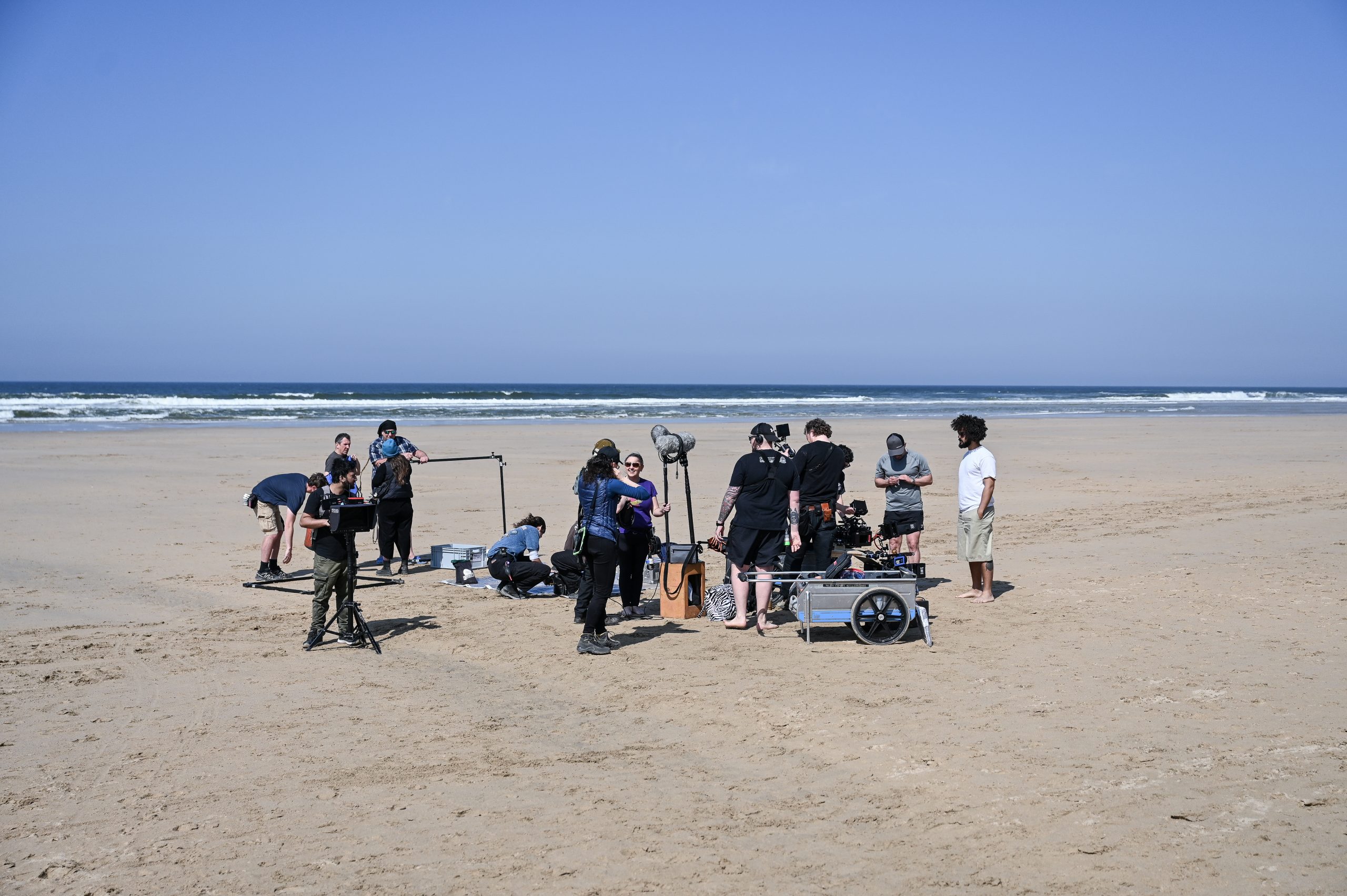
On the set of TO CATCH A SIREN
What was the most challenging part of pre-production and/or production for this short?
Honestly, so much of pre-production and production was intense — especially as I was also producing the film. It felt like a short with feature-level logistics: multiple locations, underwater filming, stunts… you name it. But weirdly, the biggest headache ended up being transportation — specifically the equipment vans. We had three Luton vans full of kit, and coordinating drivers (many of whom were doubling up as other crew), navigating tight country roads across the South of England, and finding safe, insurance-approved overnight parking was a constant puzzle. And things just kept going wrong: one van broke down on our way to the first day of filming, another got stuck in the sand on our first beach shoot day. We literally had to dig it out on our hands and knees before eventually calling in a tractor to tow it free! It was chaos — but
also kind of hilarious in hindsight.
We would love to hear about shooting on the water (and did you actually shoot actors underwater?), working with young actors, and how your team brought the mermaid costumes to life.
Our water days were the ones we were most nervous about — which is probably why we prepped for them so thoroughly. That prep really paid off, as they ended up being some of the smoothest shoot days we had! Dan Travers, our underwater camera operator and coordinator, was a calm and experienced presence on set, and thanks to him, everything ran safely and efficiently — which was essential since Layla did all her own stunts. She was incredibly brave and enthusiastic, and had a brilliant swimming coach who helped familiarise her with swimming in a mermaid tail. Burcin B. Kilic, who plays the adult mermaid, is a professional mermaid performer, and her grace in the water was just breathtaking. She even brought her own tail, which looked amazing on camera. Our incredibly talented costume designer, Sinéad Skinner, then worked her magic to create Layla’s mermaid tail, with the help of a generous sponsorship from FinFolk Productions, who provided the tail’s base and scales. Seeing everyone come together at their best for those two days was exactly the kind of magic you dream of as a producer.
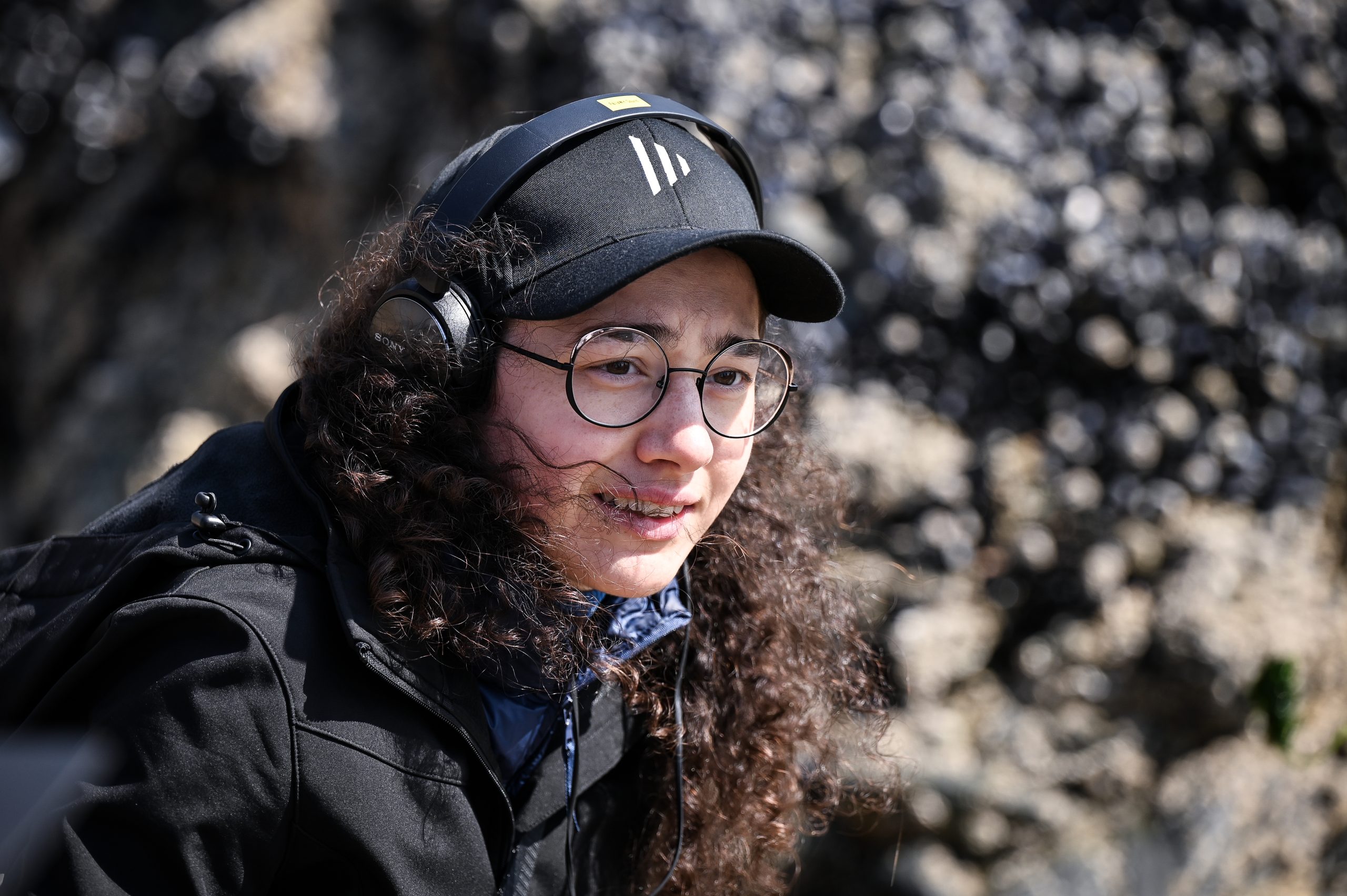
Director Raphaela Wagner on the set of TO CATCH A SIREN
We love hearing serendipitous stories. Did anything happen during production that was initially a “problem” or obstacle that ended up being the best possible thing for the project?
A few days before we were due to book an underwater tank, it unexpectedly went bust — and as it turns out, there aren’t many backup options! Finding a suitable replacement with the depth we needed (at least 4 metres) and within budget felt almost impossible. I must have contacted over 60 venues. But just as we were about to give up, we found an incredible family-run private pool in the Surrey Hills that turned out to be perfect. In fact, it worked out better for our needs than the original tank ever would have. It was a great reminder that sometimes the universe really is clearing the path for something better to come along.
How is post-production coming together?
Post-production is going really well! We’re officially picture and sound-locked, which feels like such a huge milestone. We’ve just got a bit of VFX left, before colour grading and titles, for an expected completion of mid-October. We cannot wait to start sharing it with the world!
Do you have any advice for filmmakers embarking on their first short film?
Every problem is solvable. Even when something feels impossible in the moment, with the right team and a bit of creative thinking, you can almost always find a way forward. Don’t let limited resources make you think small — you’d be amazed at what you can achieve with collaboration, grit, and ingenuity.

